Projecting my established individuality in a universal sense of fast-upcoming generational mainstream in contemporary Korea, I discuss the absence of nationality, patriotic desire, solidarity within the decade, through making painted puzzle modules that can be separated and combined into unlimited shapes, rather than being a permanent cog for a whole image. As a conductor of this puzzle scene working in Chicago, I examine my origins and identity while encountering an exotic surrounding of western culture by dismantling and reconstructing the composition.
Module (2026)
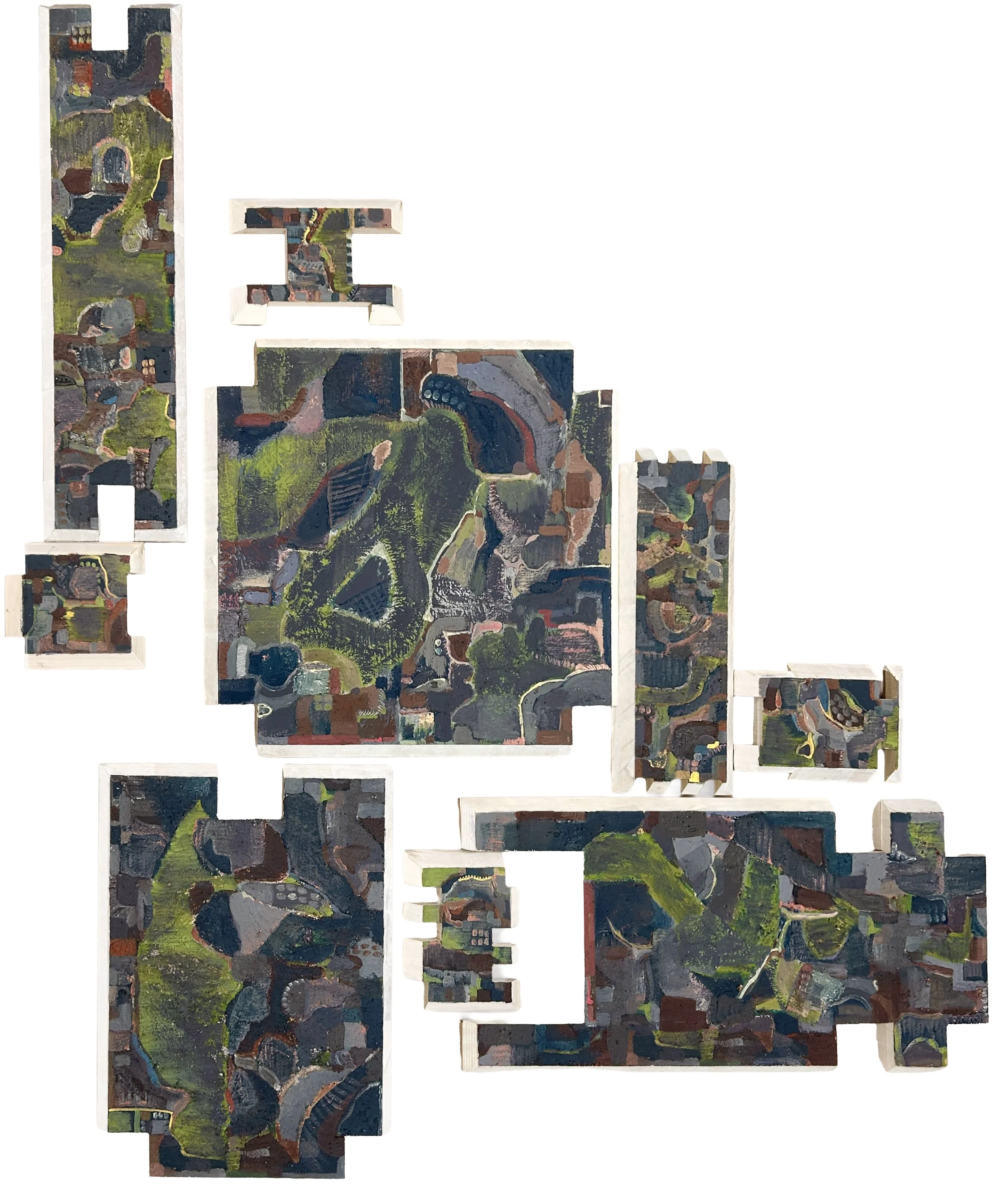
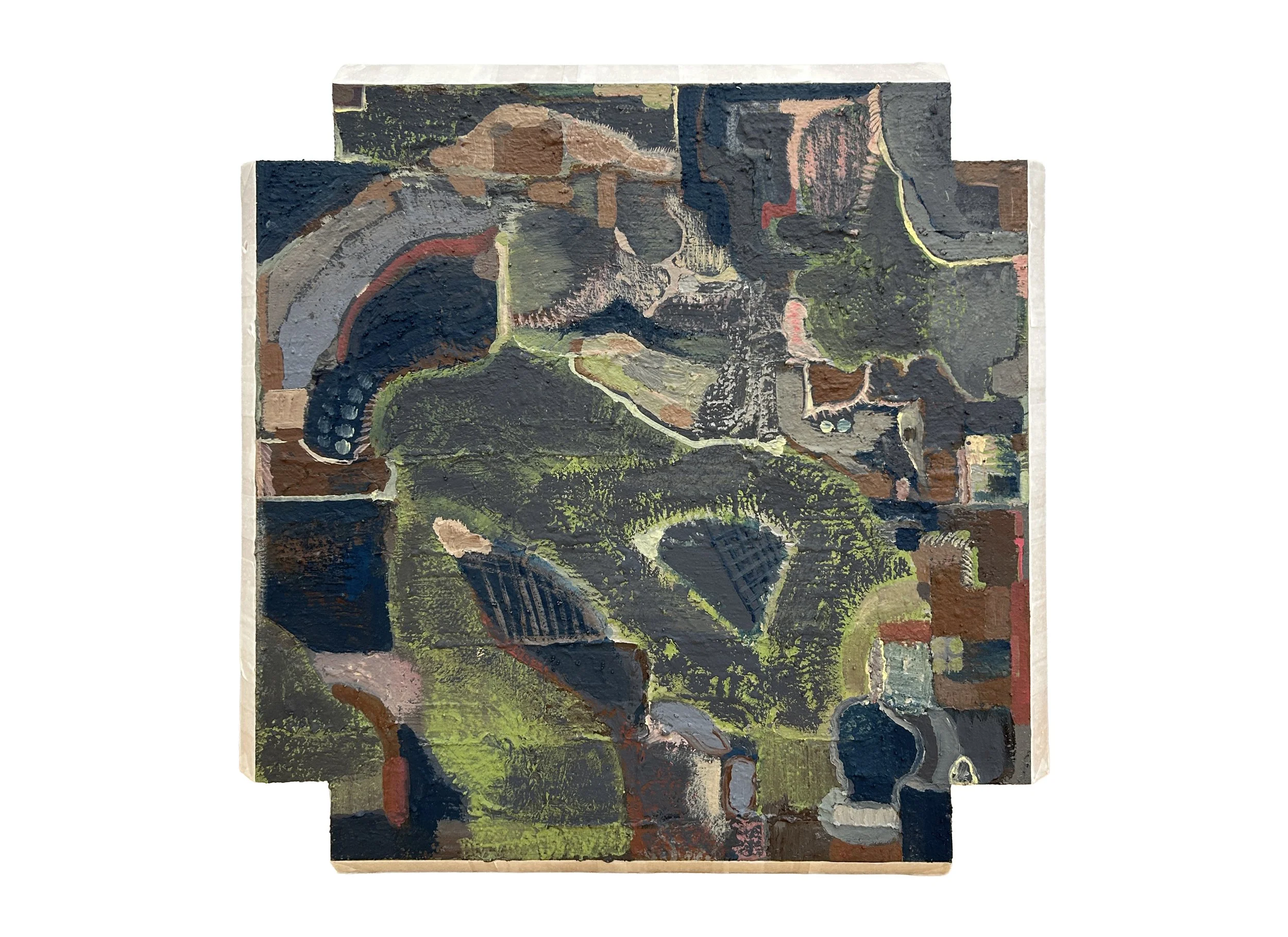
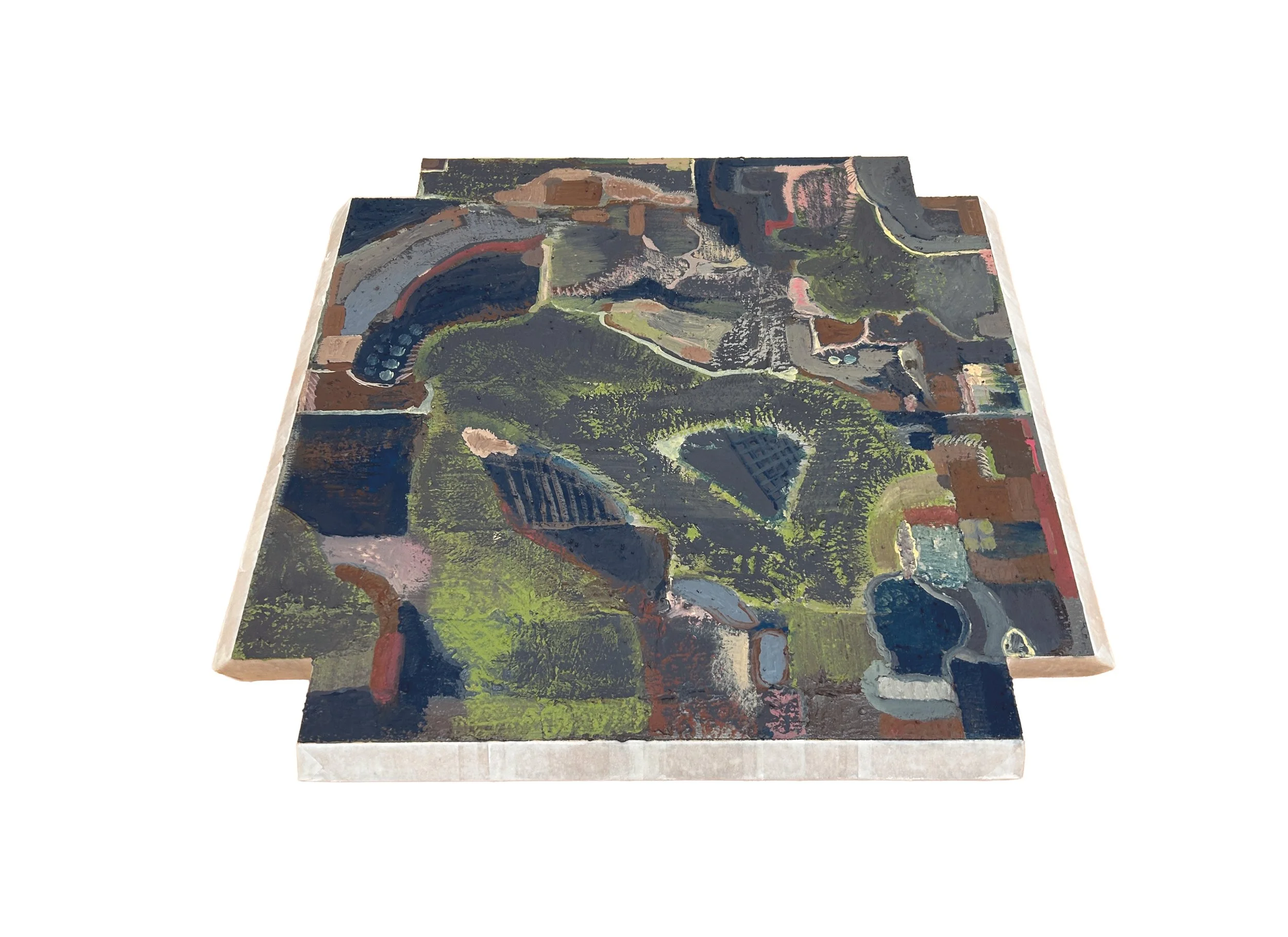
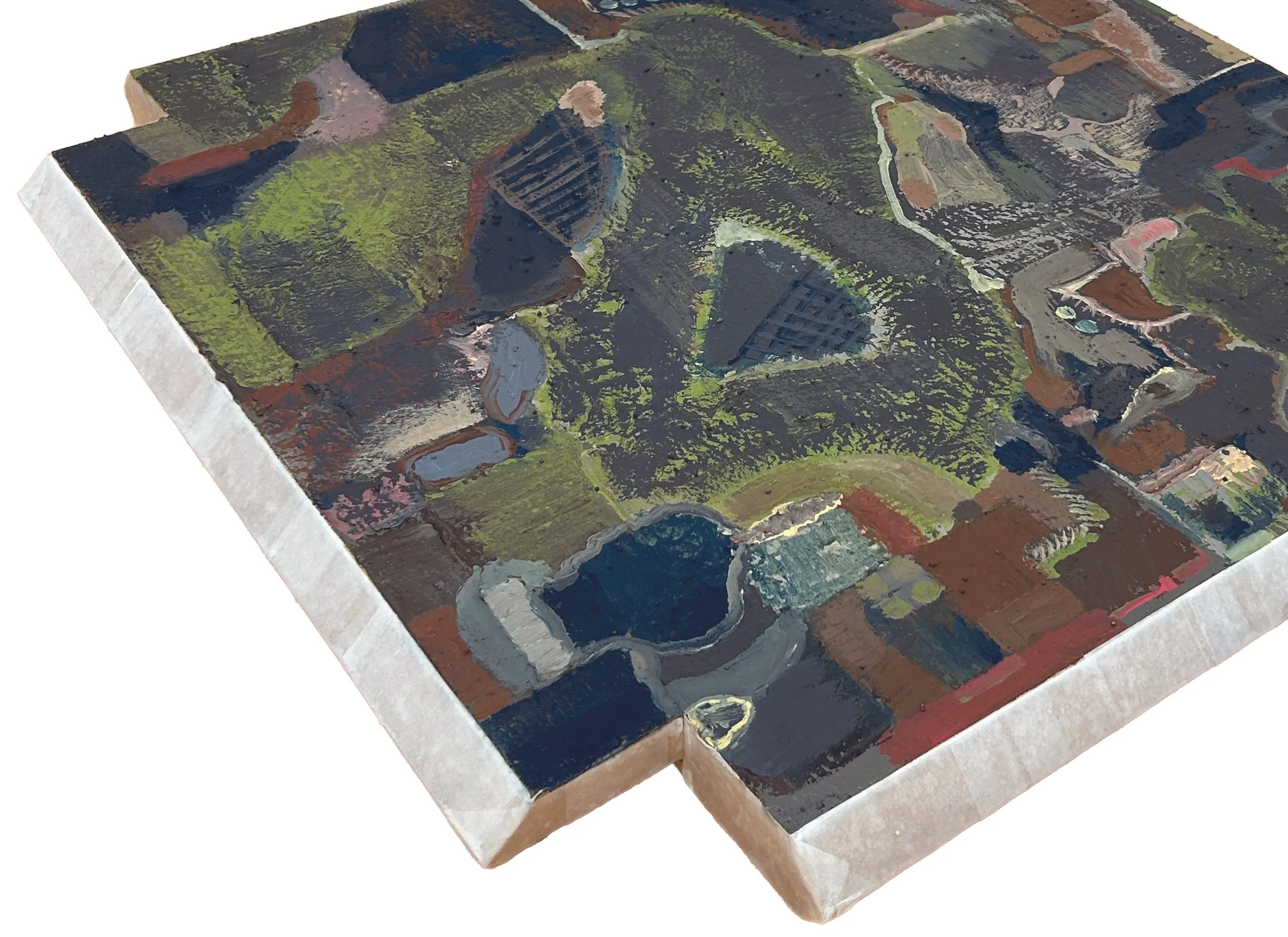
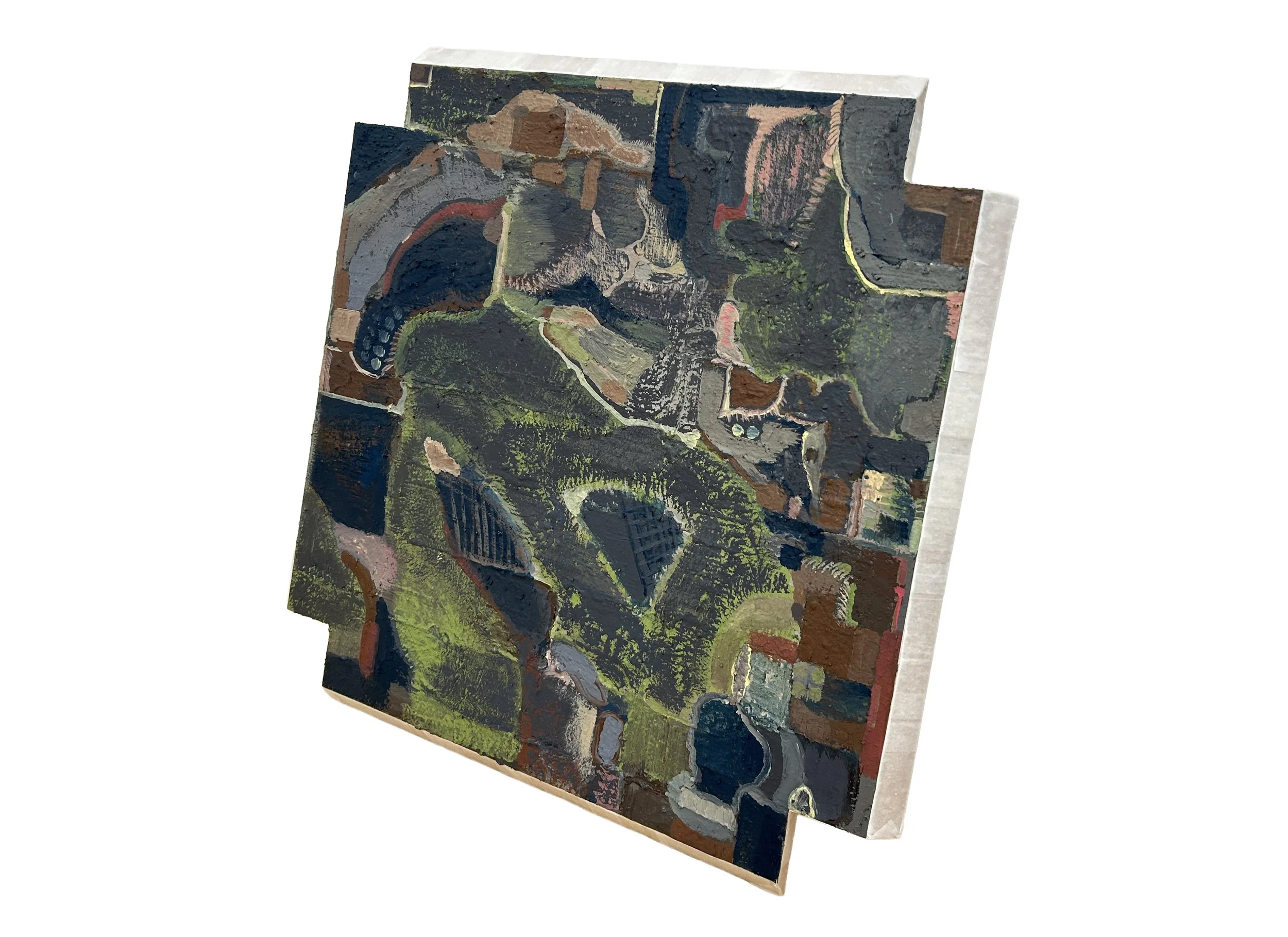
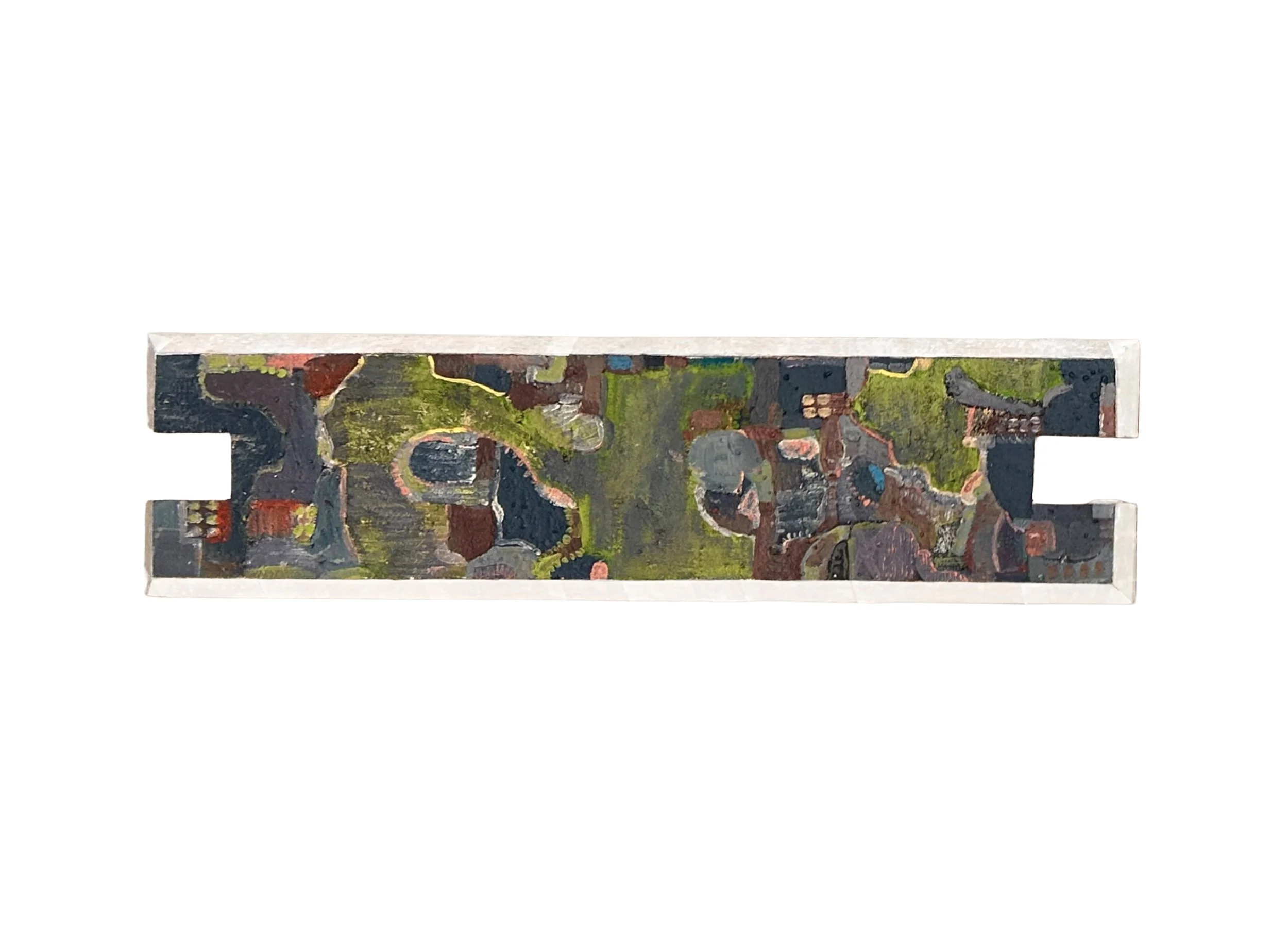
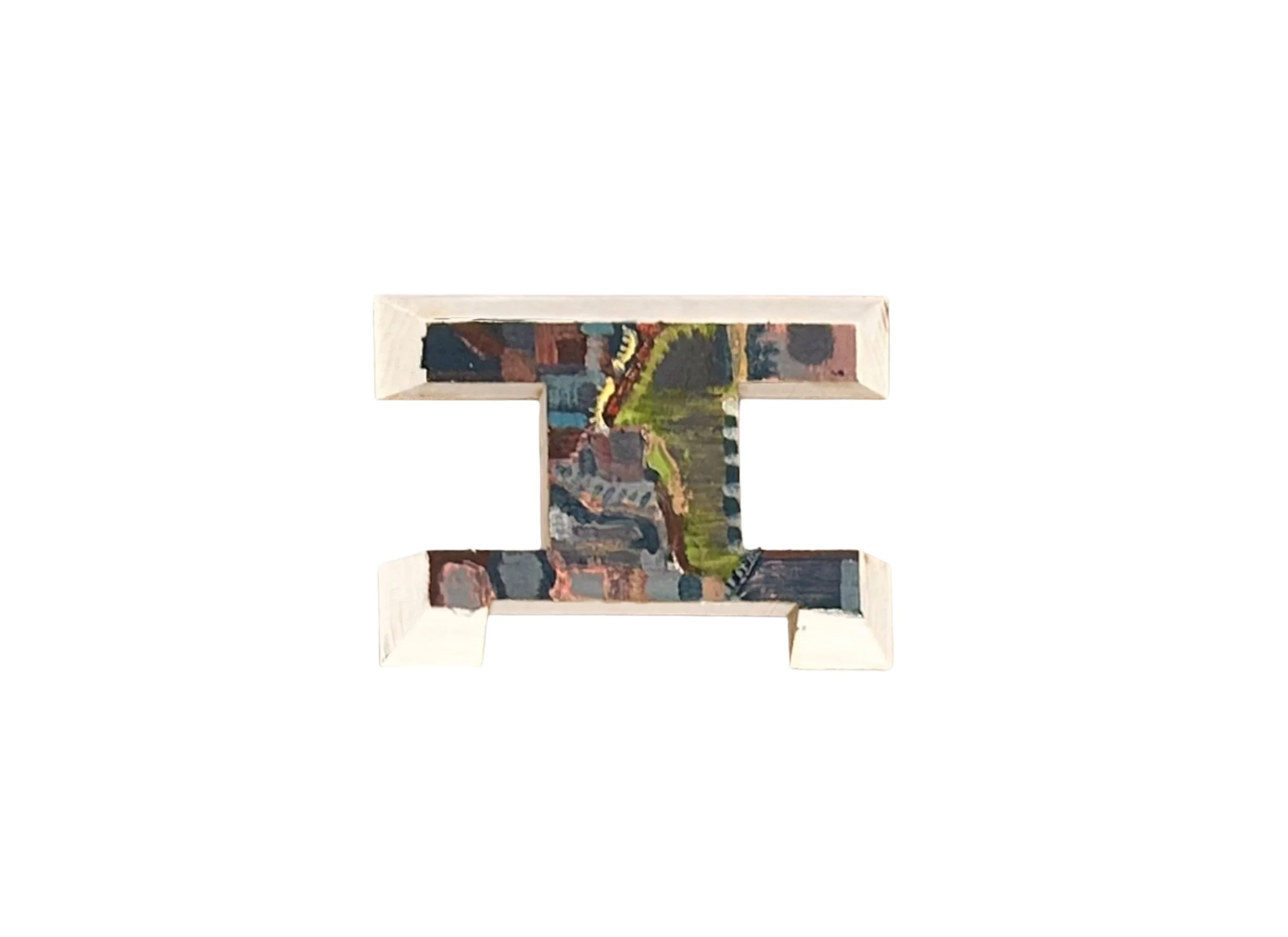
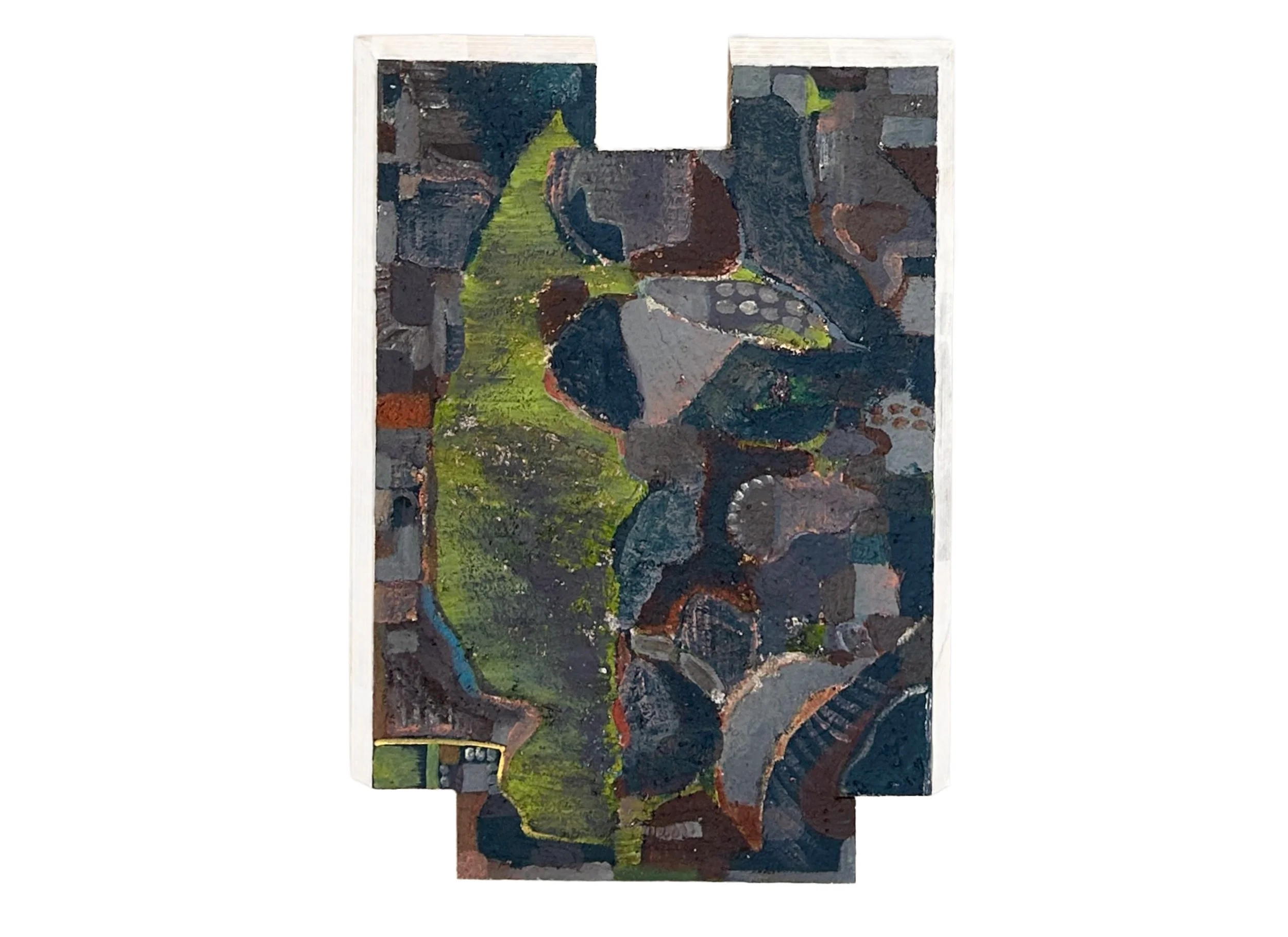
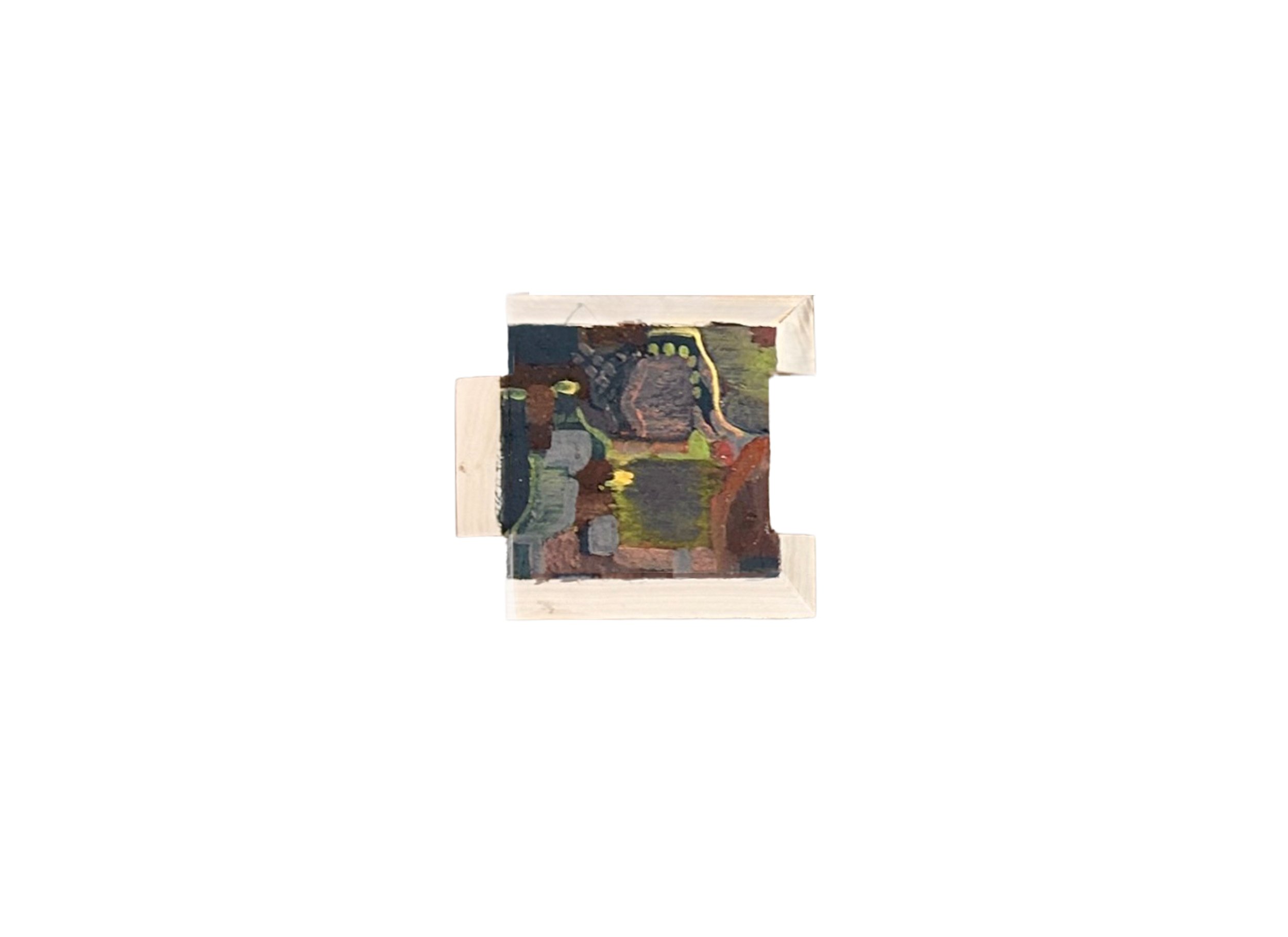
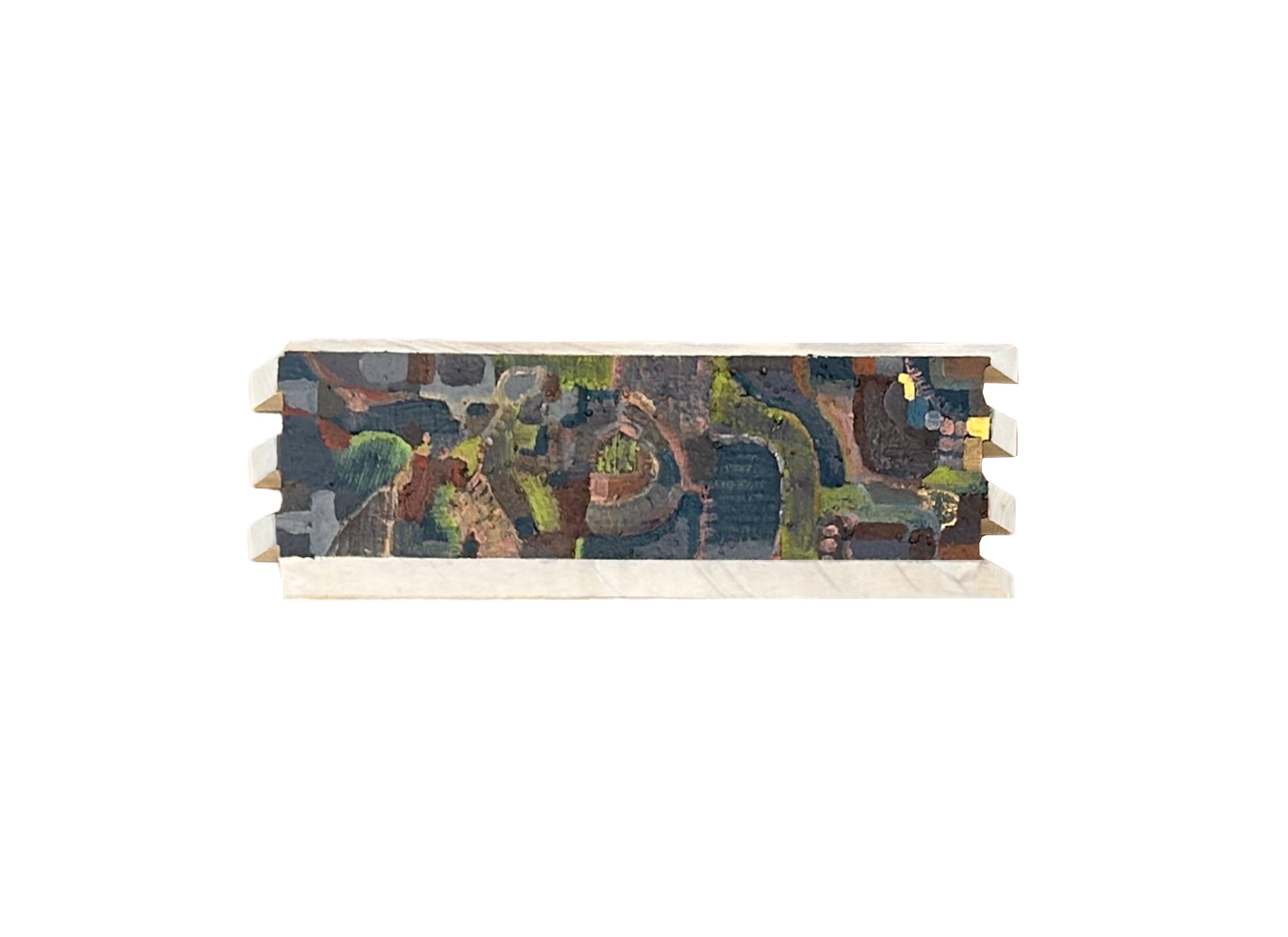
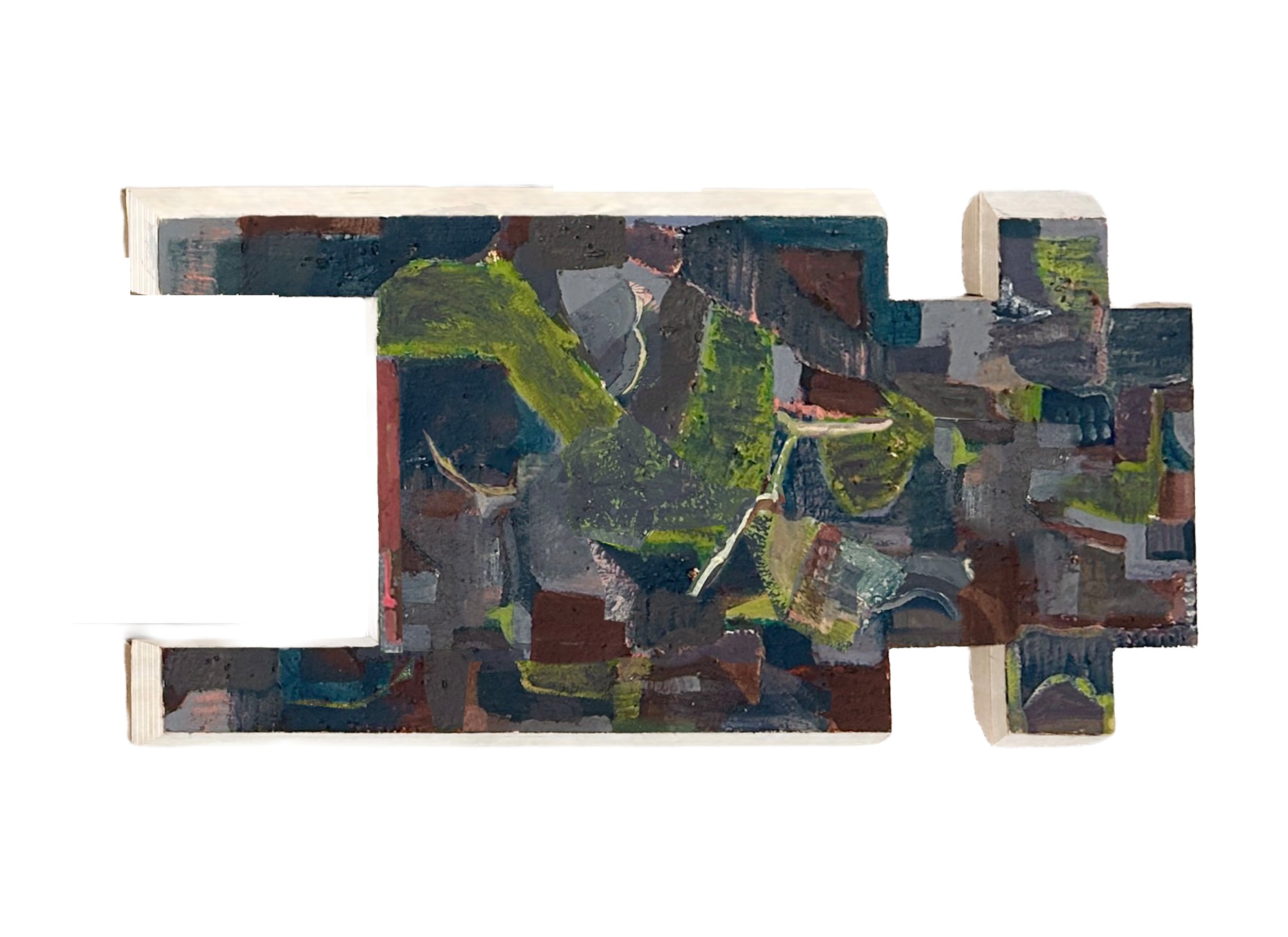
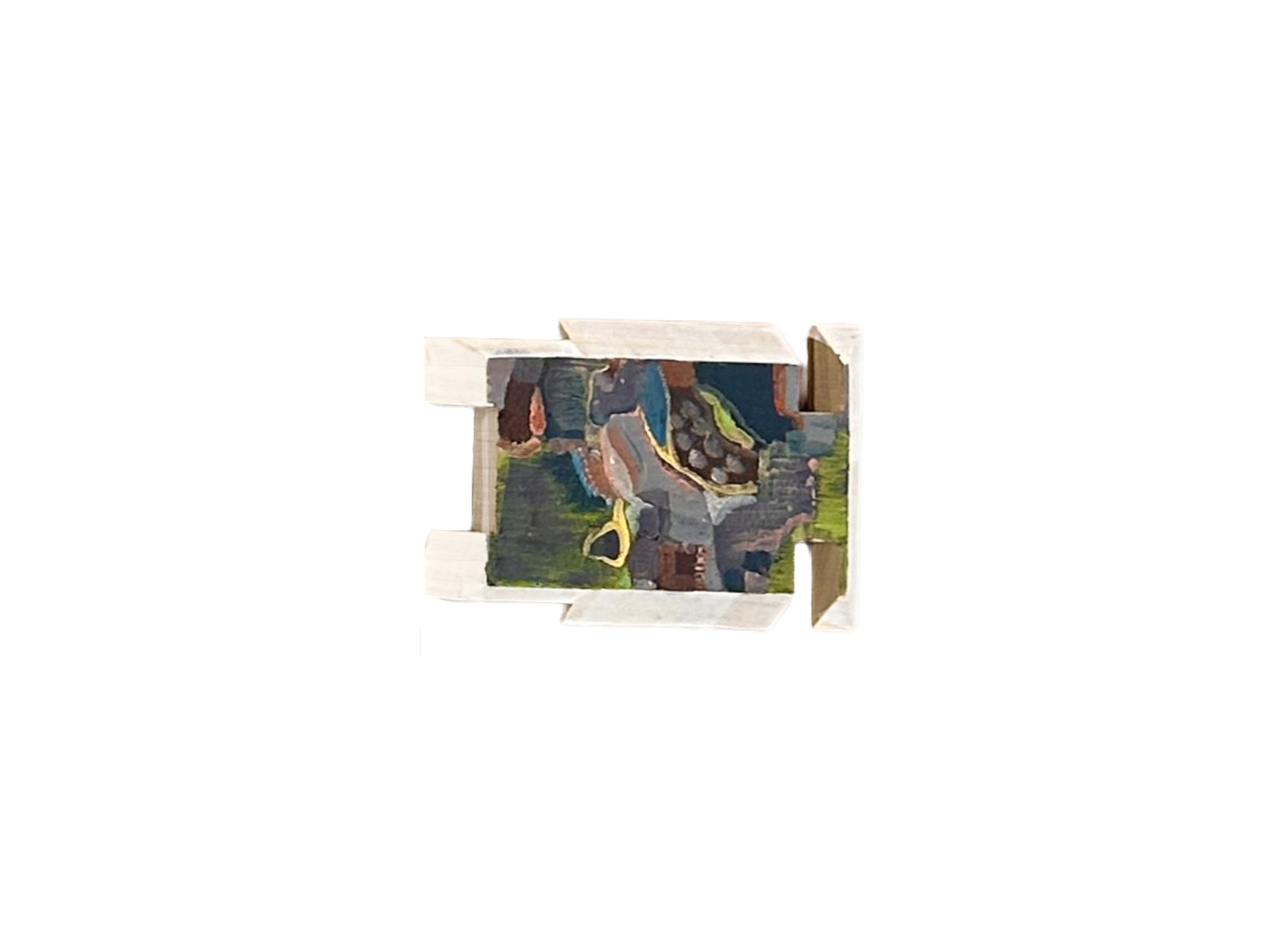
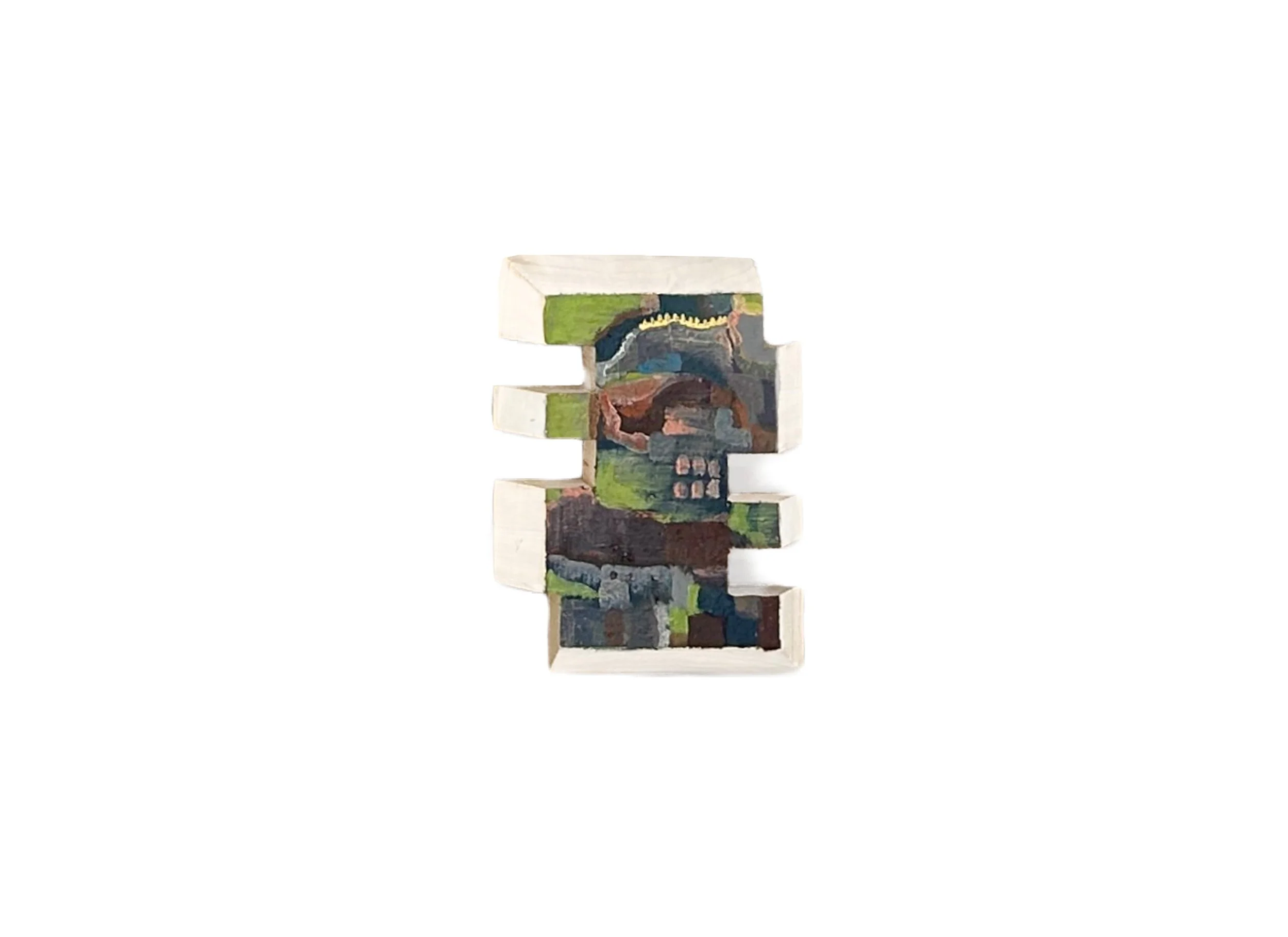
Raw wood, pigments, mineral mediums, hanji paper, 50 × 70.6 × 2 inches, 2026
The puzzles’ key ideology addresses the word ‘ideology’ itself. Pronounced like ‘ee-dae-olo-gee,’ it has expanded to mean conflicting values that cannot be narrowed between generations in contemporary society. I address the drastic difference between the 386 generation of parents, who could afford romantic solidarity and grand discourse like democracy in a high-growing economy, and the current 2030 generation, who spent their 20s in low economic growth and job shortages. Because of this background, what came to matter to my generation is not romantic values like nationality or being a patriot, but rather our own economic establishment and micro survivalism, referred to as ‘gak-ja-do-seng’ (every man for himself). I situate my practice in conversations on the antimonumental impulse. The era of individual sacrifices for a group is over, and if either nation, company, or people force one to be cogs, erasing my identity, that is argued as the same oppression regardless of dictatorship or democracy. This shift in the present 2030 cold pragmatic individualism is a key concept discussed in my work.
While my roots are compressed from my own family, surrounding society, and influenced by my years of studying traditional Korean painting, I extract materials and shapes from reality into my practice, hovering above the superficial-stereotypical framings of K-culture consumed within western audiences. While maintaining the dominant portion of my own identity, like the empty minimalism of Korean painting materials and forms, I translate it into a western language of textured acrylic mediums and puzzle forms. By this, I translate my small, dense, and specific language into a universal alienation and isolation of a modern liberal society, enabling us to be sympathized with in each one’s own way.
In my work, I use raw wood, hanji paper, and hand-grounded pigments to construct each puzzle piece that is symmetrically cut, inspired from door designs of hanok architectural forms. While my roots are compressed from my own family, surrounding society and influenced from my years of studying Korean painting, I extract materials and shapes from reality into my practice, hovering the superficial-stereotypical framings of k-culture consumed within western audiences.
The content of my paintings come from the uneven-mountainous terrains and industrial capitalist buildings in the city of Seoul I grew up in. In a fast-evolving environment, my flat figures and color blocks are situated to serve as a recorded monument for my core belief that is stagnant despite the shifts. As an artist living in Chicago, I translate my small, dense and specific language into a universal conversation of puzzle form that speaks on alienation and isolation over generations, nationality, enabling us to be sympathized in each one's own way. The foldable module form shows my realistic and pragmatic attitude of having to survive in an unstable environment.Throughout the journey, I aim to open a dialogue table for the audience on ‘how to reassemble my own pieces (identity) without losing them’ in a complex and fragmented world we belong to, away from the imagined community as a whole.